
Mastering Your Hydraulic Door Closer: A Step-by-Step Guide to Smooth, Safe, and Silent Doors
Let’s face it: a slamming door is more than just annoying—it’s a safety hazard, an energy waster, and a sign that your hydraulic door closer needs some TLC. Whether your door is racing shut like it’s in a sprint or stubbornly refusing to latch, adjusting a hydraulic door closer can solve these issues in minutes. But where do you start?
In this guide, we’ll break down everything you need to know to adjust your hydraulic door closer like a pro. We’ll cover key comparisons (spoiler: not all adjustment screws are created equal!), common pitfalls, and insider tips to keep your doors functioning smoothly for years. Let’s dive in!
Why Adjusting Your Hydraulic Door Closer Matters
Hydraulic door closers are the unsung heroes of our homes and offices. They ensure doors close securely, prevent drafts, and protect fingers from accidental slams. But over time, wear and tear, temperature changes, or simple misalignment can throw them off balance. Here’s why adjustments matter:
- Safety: A door that slams shut can injure someone or damage property.
- Energy Efficiency: Poorly adjusted closers leave gaps, letting heat or AC escape.
- Longevity: Regular adjustments reduce strain on the door, hinges, and closer itself.
Tools You’ll Need (Hint: It’s Not Rocket Science)
Before tweaking anything, gather these basics:
- Screwdriver (flathead or Phillips, depending on your model).
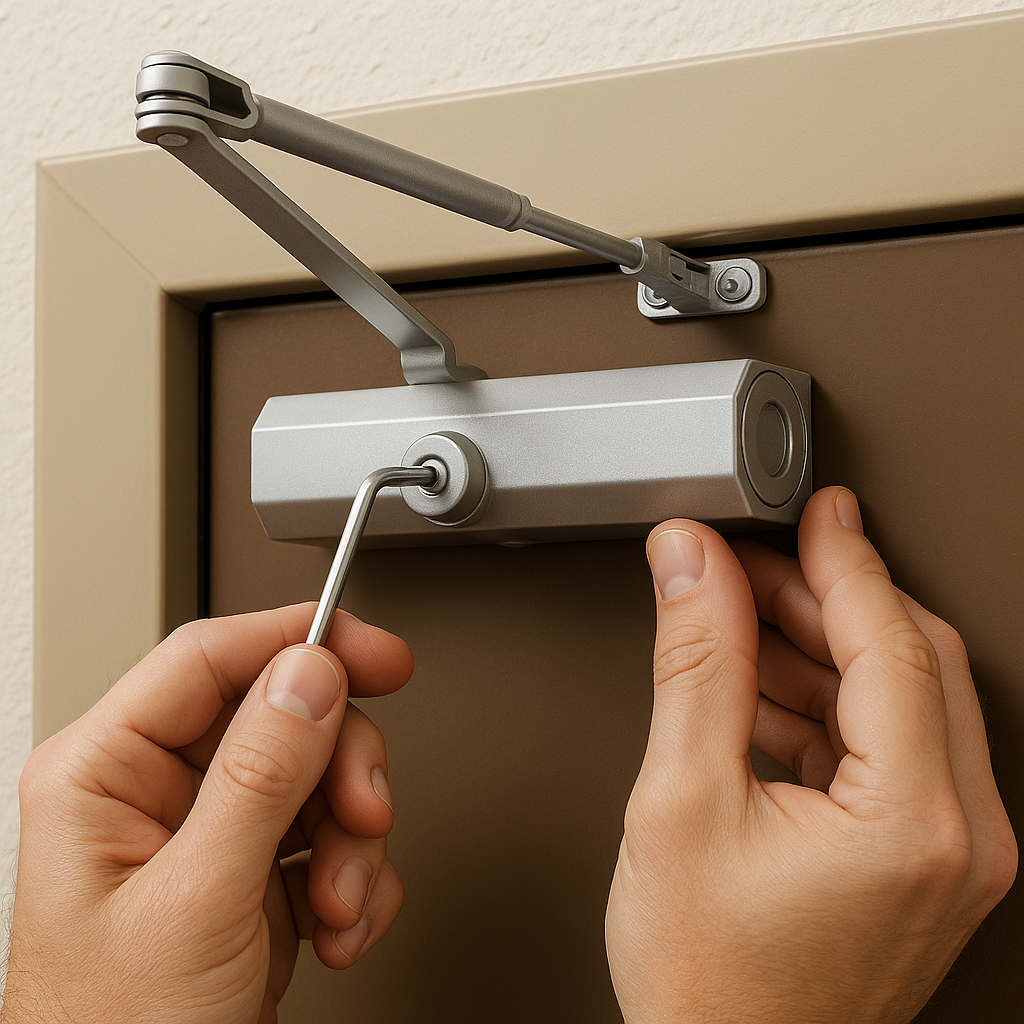
- Allen wrench/hex key (many closers use hex screws).
- Ladder (for overhead closers).
- Lubricant (silicone-based is ideal).
Pro tip: If you spot oil leaks around the closer, stop! This means the seals are compromised, and it’s time for a replacement.
Step-by-Step Adjustment Guide
1. Locate the Adjustment Valves
Most hydraulic closers have two or three adjustment screws, often labeled:

- S (Swing Speed): Controls the door’s initial closing motion.
- L (Latching Speed): Manages the final “snap” to secure the door.
- B/BC (Backcheck): Prevents the door from swinging open too forcefully (common in commercial models).
Pop off the closer’s cover—some slide off, others have screws. If you’re stuck, check the manufacturer’s guide or this step-by-step tutorial.
2. Adjust the Swing Speed (S Valve)
- Problem: Door closes too fast or too slow.
- Fix: Turn the S screw clockwise to slow the swing, counterclockwise to speed it up. Make tiny adjustments (1/8 of a turn at a time!) and test the door repeatedly.
3. Fine-Tune the Latching Speed (L Valve)
- Problem: Door slams shut or doesn’t latch.
- Fix: Adjust the L screw—clockwise for a gentler latch, counterclockwise for a firmer close. For exterior doors, a stronger latch helps combat wind or HVAC pressure.
4. Set the Backcheck (B/BC Valve)
- Problem: Door whacks the wall when opened.
- Fix: Turn the B screw clockwise to limit how wide the door opens. No B valve? Consider adding a doorstop or upgrading your closer.
Comparison Table: Hydraulic Closer Adjustment Valves 3813
| Valve | Function | Clockwise Turn | Counterclockwise Turn |
|---|---|---|---|
| S | Controls initial closing speed | Slows door down | Speeds door up |
| L | Manages final latch force | Gentler close | Firmer latch |
| B/BC | Limits door swing range | Reduces opening width | Allows wider opening |
Common Issues (and Quick Fixes)
1. Door Slams Shut
- Likely Cause: Latching speed (L valve) too high or hydraulic fluid leak.
- Fix: Turn the L screw clockwise slightly. If leaks are present, replace the closer.
2. Door Doesn’t Close Fully
- Likely Cause: Misalignment or weak latching force.
- Fix: Adjust the L valve counterclockwise and check for obstructions in the frame.
3. Door Creeps Open
- Likely Cause: Temperature changes thickening the hydraulic fluid.
- Fix: In colder months, turn the S screw counterclockwise to compensate.
Maintenance Tips to Avoid Future Headaches
- Lubricate Annually: Apply silicone spray to the arm and pivot points to reduce friction.
- Check for Leaks: Oil stains signal seal failure—replace the closer ASAP.
- Seasonal Tweaks: Hydraulic fluid viscosity changes with temperature. Adjust screws slightly in extreme heat or cold.
When to Call a Pro
While DIY adjustments work for minor issues, some scenarios demand expert help:
- Concealed Closers: Hidden in the door frame? Leave these to professionals.
- Persistent Problems: If adjustments don’t fix slamming or misalignment, the closer may be broken.
- Fire-Rated Doors: Incorrect adjustments can violate safety codes—consult a licensed technician.
Final Thoughts
Adjusting a hydraulic door closer isn’t just a fix—it’s an investment in safety, comfort, and energy savings. With a few turns of a screwdriver and patience, you can silence that annoying slam, keep your rooms cozy, and extend the life of your doors.
Got a tricky closer? Share your stories in the comments.